Pain of the Game: The "Life-or-Death" Lawsuit Under AI Export Control Orders
Introduction
In today's rapid development of artificial intelligence technology, the struggle between major powers and technological sovereignty is profoundly affecting the fate of global tech companies. Recently, a legal dispute over export controls on AI models has pushed the U.S. government, tech giant Anthropic, and startups relying on its technology to the forefront. Due to U.S. government export control orders, access to cutting-edge models was forced to shut down, sparking a fierce debate about the delicate balance between national security, commercial interests, and technological openness. A startup named Legion has filed a lawsuit against the U.S. Department of Commerce, alleging that the administrative order caused "immediate, irreparable, and life-or-death damage" to the company. This lawsuit not only concerns the survival of one company but also reflects the vulnerability of closed-source models under political interference and the growing value of open-source models in the global competitive landscape.
Chain of Events: From Ban to Lawsuit
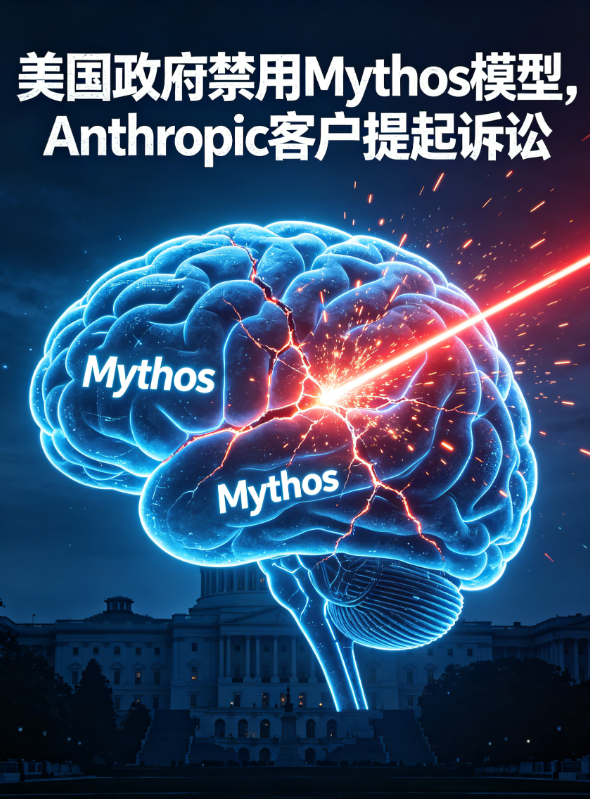
The trigger was the U.S. government's export control order on Anthropic's key AI models — Fable 5 and Mythos 5. According to the order, Anthropic must obtain prior government permission before exporting these models abroad or providing them to foreign nationals anywhere. This forced Anthropic to quickly shut down access to these models, setting off a chain reaction in less than two weeks.
The plaintiff, Legion, is a U.S.-based litigation technology company that develops smart tools for lawyers. The company stated that its software development team includes Canadian citizens working in Canada. This cross-border background unexpectedly triggered the red line of U.S. export controls. In its lawsuit, Legion pointed out that Anthropic's closure of access to the Fable 5 model meant the company instantly lost a key tool for developing its core products. The order caused "immediate, irreparable, and life-or-death damage" to Legion. The defendant explicitly named in the lawsuit includes U.S. Secretary of Commerce Lutnick, who had warned Anthropic's CEO in a letter that government permission must be obtained before exporting Fable 5 and Mythos 5 abroad or providing them to foreign nationals anywhere.
This sudden ban not only put Anthropic in a passive position but also caught countless third-party companies relying on its technology off guard. For startups like Legion, the sudden interruption of technical tools means product development disruption, customer service stagnation, financing plan collapse, and even the risk of bankruptcy. In essence, this lawsuit is a small company's desperate struggle against the state apparatus.
Closed-Source vs Open-Source: A "Life-or-Death" Choice
This lawsuit has sparked deep concern in the market about the vulnerability of closed-source models to political interference. The core competitiveness of closed-source models lies in their closedness, controllability, and commercial value, but precisely this closedness makes them more fragile in the face of government administrative orders. Once the policy direction shifts, the fate of closed-source models can reverse instantly. As Legion experienced, a company can lose the technology tools it depends on for survival due to a policy change in one country.
In stark contrast, open-source models are gaining more attention in this storm. Open-source models, due to their openness, transparency, and decentralization, naturally have stronger resistance to policy interference. Even if a country's policy changes, the open-source community and global developers can still maintain access to and iteration of core code through technical means like forking and mirroring. In the current international political environment, open-source models are not just a technical choice but a strategic one, granting developers greater autonomy and security boundaries.
For enterprises innovating based on AI models, this event is undoubtedly a wake-up call. Over-reliance on a single closed-source model, especially in the context of cross-border operations or international collaboration, can place a company under enormous political risk. Enterprises need to find a balance between technological progress and political risk. The flexibility and resilience offered by open-source models are becoming rational choices for more and more companies.
The Dual Nature of Technological Power: Controversial Value of the Mythos Model
In this ban storm, the Mythos model has always been at the center of public opinion. Since its release early this year, Mythos has attracted international attention due to its powerful performance in discovering cybersecurity vulnerabilities. Precisely because of this power, the model has been under restricted access since its release. Fable 5, as a simplified version of Mythos, seeks a balance between practicality and security.
A U.S. official said on Tuesday that Anthropic, in cooperation with U.S. intelligence agencies, used its Mythos model for testing and discovered certain security vulnerabilities within hours. However, the official also clarified that this does not mean the model can simultaneously exploit these vulnerabilities in a short time. In other words, the Mythos model is a sharp double-edged sword: it excels at finding vulnerabilities but does not necessarily lead to attacks. However, it is precisely this potential risk of "weaponization" that triggered high-pressure regulation from the U.S. government.
Notably, although Anthropic recently cooperated with U.S. agencies to test vulnerabilities in its AI systems, this did not ease the growing tension between the company and the Trump administration. Anthropic expressed concerns about how the U.S. military might use its AI systems, reflecting moral anxiety about potential technology misuse. Nevertheless, an Anthropic spokesperson said in a statement that the company appreciates the government's efforts to address the security issues of the Mythos model and promises to continue cooperating with the government to protect critical infrastructure and ensure U.S. leadership in AI.
This surface-level cooperation and underlying rivalry reflect the complex entanglement of interests between tech companies and national security. On one hand, companies need market access and policy support from the government; on the other hand, the government needs companies' technical capabilities and willingness to cooperate. When interests conflict, it is often third-party companies like Legion that suffer.
Expert Perspective: Ban Not the Best Option, Helps Competitors
Regarding this ban, experts from AI and cybersecurity fields have voiced different opinions. Some AI experts and cybersecurity executives believe that the Trump administration should revoke the order because it may benefit U.S. adversaries more than harm them. This seemingly counterintuitive view has solid logic.
More than a hundred cybersecurity experts and corporate leaders from well-known companies including Adobe and Nvidia jointly wrote to the U.S. government, bluntly stating that Anthropic's Mythos model is quite good at finding software flaws and weaponizing vulnerabilities, but it is not "unique." In the global competition in AI and cybersecurity, the U.S. is not the only technological powerhouse. If the U.S. unilaterally restricts the export of its most powerful models while rival countries can continue to use similar or even more advanced technologies, such "protection" actually weakens U.S. competitiveness.
The experts' opinion contains profound strategic thinking: the essence of technological competition is competition in innovation ability, not blocking ability. In today's globalized tech ecosystem, unilateral export controls not only fail to effectively contain adversaries but may also drive the outflow of domestic enterprises and talent, accelerating technology diffusion. Conversely, if the U.S. maintains technological openness and encourages innovation collaboration, it can actually consolidate its technological hegemony in AI.
Furthermore, this event reveals another possibility: excessive restrictions may spur independent research and development by other countries. When American companies cannot access the most advanced AI models, other countries may accelerate the development of their own substitutes. In long-term competition, this may not be beneficial to the U.S. From this perspective, revoking the ban and returning to rational negotiation might be the wiser choice.
Conclusion: Finding Balance Between Technological Sovereignty and Commercial Freedom
Legion's lawsuit against the U.S. government appears to be a company's survival struggle, but in essence, it is a profound questioning of the current AI governance system. As AI technology increasingly permeates every corner of the economy and society, the tension between technological sovereignty and commercial freedom will become more pronounced. How to maximize the protection of corporate innovation and market competitiveness without sacrificing national security is a real challenge facing governments.
For Anthropic, this event is undoubtedly a profound lesson. Although it is cooperating with the government to find solutions, the damage has been done. For startups like Legion, relying on a single closed-source model subject to political interference carries risks far beyond expectations. In the future, enterprises need to more carefully assess technology dependency risks and pay more attention to exploring and utilizing open-source models.
For the U.S. government, this lawsuit and expert criticism are also an important policy review opportunity. In the AI field, America's real advantage lies in its open, innovative, and collaborative ecosystem, not in closed, exclusive technological barriers. If export controls are excessive, they may instead weaken its own competitiveness and help rivals catch up.
Ultimately, the development of AI technology should not become a victim of great power games. Only by finding a balance between technological sovereignty and commercial freedom can we ensure both national security and innovation vitality, truly realizing the beautiful vision of technology benefiting humanity.