According to the latest statistics from the Ministry of Finance, the national government procurement full-process electronic transaction coverage rate in the first half of 2026 reached 98%. Except for a very small number of confidential special projects, all government procurement projects for goods, works, and services have achieved a full-chain closed-loop management including online publication of procurement intentions, online acquisition of tender documents, remote online bidding by bidders, remote bid opening, automatic electronic system evaluation, and online contract filing. Digital transformation continues to reshape government procurement transaction rules, further standardize the bidding market order, and continuously optimize the business environment for small and medium enterprises participating in government procurement.
In the previous traditional offline bidding model, enterprises from other regions had to travel to the project location to submit paper bids and attend on-site bid openings, with costs such as travel, bid printing, and manual errands raising the threshold for SME participation. With the interconnection of the national unified government procurement e-platform, suppliers only need to register online to participate in various government procurement projects across regions, with remote decryption and bid opening, and online Q&A clarification, significantly reducing the comprehensive bidding cost. Data from multiple regions show that after the implementation of e-transformation, the cross-regional award rate for SMEs increased by 22.7% year-on-year, and regional market barriers were further broken.
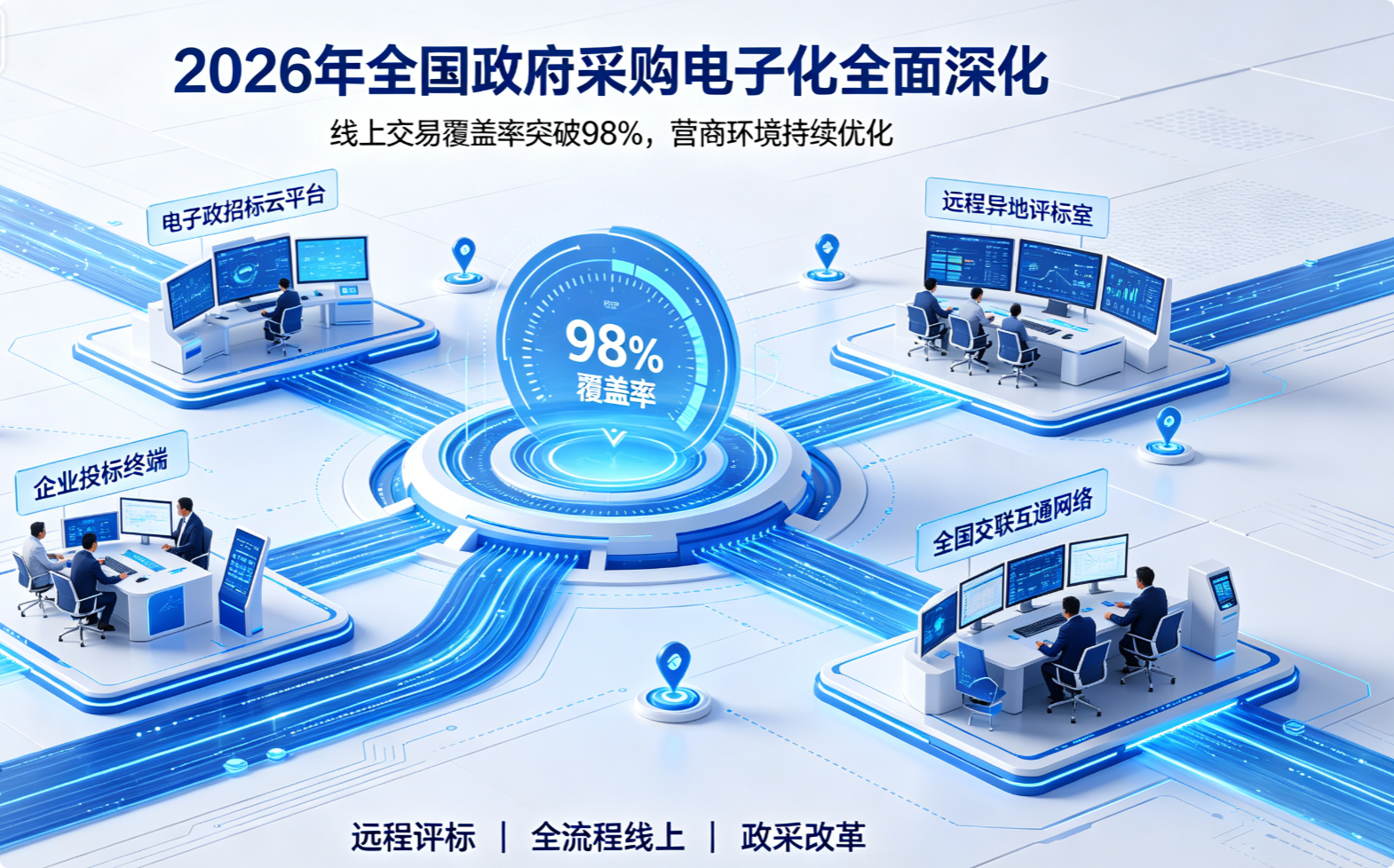
At the regulatory level, the electronic system records all operations with traceability, from procurement intention announcement, tender document publication, bidder qualification review, random expert selection, bid opening evaluation, result announcement to contract performance acceptance and payment. Every operation node is automatically archived, and discipline inspection and financial regulatory authorities can access transaction data at any time for in-process and post-event verification, effectively curbing violations such as bid rigging, tendentious tender documents, and under-the-table operations. At the same time, the system has a built-in blacklist automatic interception mechanism, directly restricting seriously dishonest enterprises in government procurement from bidding, using technology to build a fair bottom line for government procurement.
Remote cross-region evaluation has become a core highlight of this reform, with multiple regions establishing a cross-regional pool of evaluation experts to break the imbalance of expert resources within provinces. Grassroots projects can randomly select remote evaluation experts from provincial or even national expert databases, effectively avoiding local human factors and improving evaluation fairness. Relying on electronic encryption, full audio and video recording, and remote online independent scoring mechanisms, the evaluation process has become more transparent and standardized.
In terms of policy support, various regions have simultaneously implemented support policies such as reserved shares for SMEs in government procurement, price deductions, bid bond exemptions, and advance payment systems, and embedded them into the electronic system for mandatory verification to ensure that policies such as 3%-10% price preferences and reserved project shares for small and micro enterprises are implemented without deviation. Industry experts say that government procurement e-transformation is not only an upgrade of transaction methods but also a key starting point for institutional standardization and regulatory digitalization. In the future, the government procurement platform will continue to be connected with Credit China, public resource trading platforms, and the national treasury payment system for data sharing, building a transparent, efficient, and fair national government procurement market.