Trump Says He'll Blame Vance If Iran Deal Fails; Markets Focus on US-Iran Talks
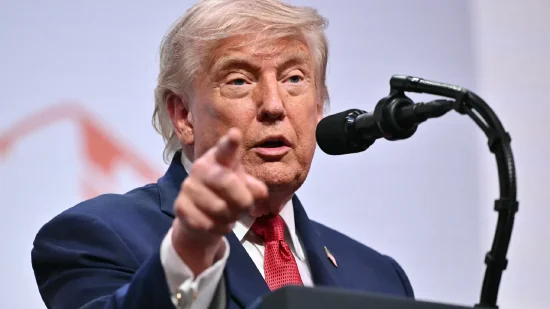
U.S. President Trump said Wednesday that if the deal to end the war with Iran fails, he would be happy to blame Vice President JD Vance.
Trump joked, "If the deal gets done, credit goes to me. If not, I'll blame Vance." This came after a reporter noted that sending the vice president to sign the deal with Iran in the coming days was making Vance a scapegoat.
Trump made the remarks to reporters at the G7 summit in Évian-les-Bains, France, as a senior U.S. official read the text of the so-called memorandum of understanding with Iran during a conference call with reporters, while two Republican senators criticized the deal.
The deal text requires Israel to immediately cease military operations in Lebanon, and Iran to fully reopen the Strait of Hormuz for at least 60 days with no tolls.
The 14-clause memorandum of understanding includes a U.S.-Iran agreement addressing how to handle Iran's stockpile of highly enriched uranium.
One official argued on the call that there is currently no urgent need for the U.S. to enter Iran to retrieve these materials, because last summer's bombing of Iranian nuclear facilities was so successful that the materials were deeply buried.
The official said of the nuclear materials the government had said it would remove, they are buried "very, very deep" thanks to the success of "Operation Midnight Hammer," the U.S. strikes on Iranian nuclear sites in June 2025.
Since launching the war on February 28, Trump has repeatedly argued that the U.S. needs to strike Iran again because the Islamic Republic poses an imminent threat of developing nuclear weapons. But the official's remarks suggesting the materials have been inaccessible since last summer seemed to undermine Trump's argument.
In a video address announcing the war, Trump said containing Iran's nuclear ambitions was his reason for the attack. He said Iran was trying to rebuild its nuclear program and continue developing long-range missiles that could threaten European allies, overseas forces, and the U.S. homeland.
Louisiana Republican Senator Bill Cassidy posted on X that the deal is "the worst foreign policy blunder in decades."
Cassidy said Iran's nuclear ambitions have not been curbed; they have tasted the benefits of threatening the Strait of Hormuz and will surely do so again. He added that under the deal, Iran can build entirely new infrastructure.
North Carolina Republican Senator Thom Tillis told reporters on Capitol Hill that since the first kinetic strike, $100 billion has been spent, two F-18s and several other aircraft lost, 13 people killed, multiple Middle Eastern partners attacked, and 365 people wounded.
"I need more than 14 clauses," Tillis said.
Trump's comment about preferring Vance to attend the signing ceremony came at the end of the press conference. He told Fox News reporter Peter Doocy that it is a memorandum of understanding, possibly not the kind of document he should sign.
When Doocy pressed, "If the deal goes through, sending the vice president makes you look brilliant; if it doesn't, it's the vice president's fault, right?" Trump replied, "I like that idea."
Trump added, "If it works, credit to me. If not, I blame JD. You better be careful, JD. He'll turn the plane around and get the hell out of here."
Key points of the full memorandum of understanding
The text shows that the U.S. and the Islamic Republic of Iran have reached an agreement in good faith, with core elements including: immediate and permanent cessation of military operations, negotiating a final agreement within a maximum of 60 days, lifting the maritime blockade, gradually resuming commercial shipping, and discussing Strait of Hormuz management and maritime services in subsequent arrangements.
The memo also states that the U.S. commits to working with regional partners to develop at least $300 billion in reconstruction and economic development plans for Iran, and to terminate various sanctions in the final agreement, including UN Security Council resolutions, International Atomic Energy Agency Board of Governors resolutions, and U.S. unilateral sanctions.
On the nuclear issue, Iran reaffirms it will not acquire or develop nuclear weapons. Both sides agree to handle enriched material stockpiles through a joint mechanism, conduct on-site dilution under IAEA supervision, and negotiate on uranium enrichment and other nuclear-related matters.
Additionally, the deal includes maintaining the current status quo, allowing Iranian crude oil and related services exports, releasing frozen or restricted funds and assets, and establishing an implementation mechanism to oversee compliance. The final agreement will be endorsed by a binding UN Security Council resolution.