Zhongji Health's Bulk Tomato Paste Destocking: The Reality of Selling a Bucket, Losing a Bucket
On June 29, Zhongji Health resumed trading after removing the risk warning tag, changing its stock abbreviation from '*ST Zhongji' to 'Zhongji Health'. On the first day of resumption, as of press time, Zhongji Health's share price stood at 3.29 yuan per share, up 2.17% from the closing price of 3.22 yuan on June 25.
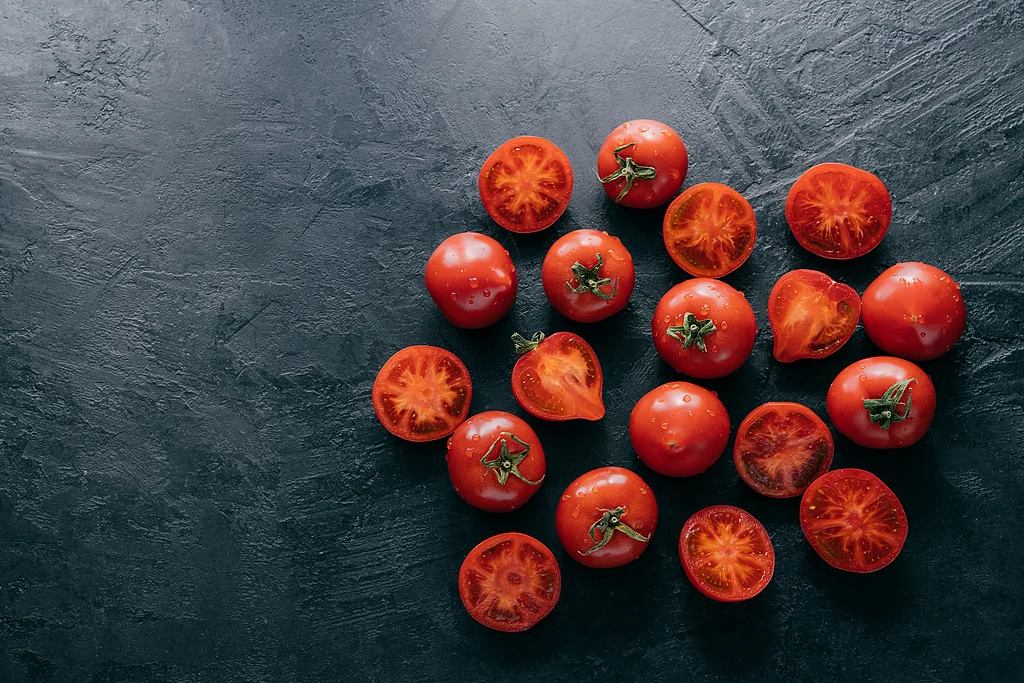
Zhongji Health, located in Wujiaqu, Xinjiang, mainly produces tomato products. The bulk of its revenue comes from bulk tomato paste, which is primarily used as a basic ingredient in food processing and catering supply chains, mainly sold to B-end customers.
In 2025, the company crossed the two financial thresholds required for delisting risk warning removal: owners' equity attributable to shareholders of the listed company turned positive, reaching 26.1223 million yuan at year-end; deducted revenue reached 488 million yuan, above the 300 million yuan red line.
But profitability has not yet recovered. In 2025, Zhongji Health's net profit attributable to shareholders of the listed company was still a loss of 46.2318 million yuan, and its non-recurring net loss was 293 million yuan. Removing the '*ST' label does not mean that the main business's cash-generating ability has recovered.
Sales Up and Inventory Down: Destocking Pushes Revenue Over the Line
Supporting the revenue over the line was the company's obvious destocking actions: production reduced, inventory fell, sales increased. The annual report shows that in 2025, Zhongji Health's bulk tomato paste revenue was 448 million yuan, accounting for 91.12% of total revenue; sales volume was 132,100 tons, up 249.47% year-on-year. Corresponding to the sharp sales increase, the company's production volume of bulk tomato paste that year was only 7,500 tons, down 95.61% year-on-year, and inventory dropped to 91,000 tons, down 57.80%.
Negative Gross Margin: Bulk Tomato Paste 'The More You Sell, the More You Lose'
The problem is that this is not a business that makes more money the more you sell. According to the company's corrected data, the gross margin for bulk tomato paste in 2025 was -20.41%, and the company's overall gross margin was -15.66%. That is, the main business accounting for over 90% of revenue is already in a negative gross margin state.
Two Major Pressures Explain 'Sell More, Lose More'
In its annual report and response to inquiry letters, the company's explanation pointed to two core pressures: price and shelf life.
First, price. The company mentioned that the average export price of Chinese tomato paste above 5kg fell to $675/ton in 2025, down 32.5% from $1,000/ton in 2024, hitting a low in recent years. Domestic bulk tomato paste prices also remained sluggish, with high industry inventory, and some companies' low-price selling exacerbated the downward price pressure.
Blue Whale reporter sorted the company's annual data: the average selling price of bulk tomato paste in 2023 was 7,857.91 yuan/ton, falling to 5,866.22 yuan/ton in 2024, and further dropping to 3,395.43 yuan/ton in 2025. The company said that the decline in selling prices was greater than the reduction in costs, creating a situation of 'selling more, losing more'.
Second, shelf life. Zhongji Health's annual report disclosed that bulk tomato paste has a shelf life of 720 days, i.e., two years. The company said that product prices decline non-linearly with shelf life, and prices for near-expiry products drop particularly sharply. Against the backdrop of a sharp drop in international orders, a saturated domestic market, and increasing shelf life pressure, the company had to increase sales volumes, but selling prices continued to fall, resulting in a price inversion between production and sales.
From an operational perspective, selling at a loss is not good, but it may be a more realistic choice: not selling would continue to tie up funds and face further price drops, impairment, and expiry risks; selling alleviates cash flow and inventory pressure but weighs on profits.
Risks Remain After Label Removal: Pre-Reorganization Progress and Subsequent Delisting Risks
However, label removal does not mean risk clearance. In 2025, Zhongji Health's asset-liability ratio was still as high as 97.79%, and the company and its wholly-owned subsidiary Red Tomato have entered pre-reorganization proceedings.
According to disclosures, in July 2025, Zhongxingcai Guanghua Certified Public Accountants (Special General Partnership) filed a petition with the court for reorganization and pre-reorganization of the company on the grounds that the company was unable to repay its debts as they fell due and clearly lacked solvency, but had reorganization value. On the same day, Xinjiang Hengyuan Water Supply Co., Ltd. also filed a similar petition for reorganization and pre-reorganization of Red Tomato on similar grounds.
The company said it is cooperating with the interim administrator under court supervision and guidance to advance debt review, audit, and evaluation matters. However, pre-reorganization does not mean that the court will definitely accept the reorganization application. If the court later rules to accept the reorganization, stock trading may be superimposed with a delisting risk warning; if reorganization fails and bankruptcy is declared, the company's stock will also face the risk of being terminated from listing.
As of press time, the reporter's call and letter to Zhongji Health received no response.
Q1 2026 Still in Loss: Equity Continues to Decline
In the first quarter of 2026, Zhongji Health achieved revenue of 54.8219 million yuan, down 30.33% year-on-year; net profit attributable to shareholders of the listed company was a loss of 19.6295 million yuan, compared to a loss of 7.2557 million yuan in the same period last year; non-recurring net loss was 20.5002 million yuan. By the end of the first quarter, owners' equity attributable to shareholders of the listed company fell to 6.4928 million yuan, down 75.14% from 26.1223 million yuan at the end of 2025.
For Zhongji Health, resumption only temporarily removes the '*ST' label. The key question is: when 90% of revenue comes from bulk tomato paste with a negative gross margin, after destocking, what can the company rely on to make money?